Manhattan FISP & Local Law 11 facade inspections, done hands-on by our QEWIs.
Under Local Law 11 of 1998, every New York City building taller than six stories needs a Critical Examination of its exterior walls every five years. From Midtown towers to pre-war co-ops, our Qualified Exterior Wall Inspectors go up on the lift or the rig, file the report with the DOB, design the repairs and get you back to Safe.
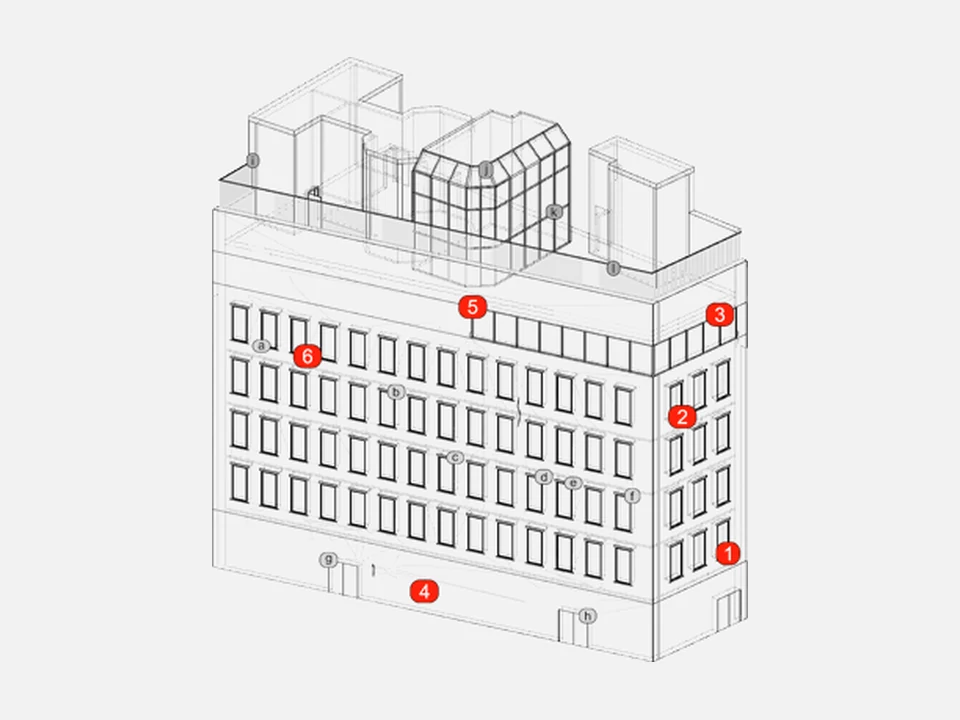 Conditions mapped from 3D scans
When is your FISP report due?
Your sub-cycle is set by the last digit of your tax block number. You'll find the block on your DOB Building Information System (BIS) page or your property tax bill.
New buildings file their first report by the fifth anniversary of the first Temporary or final Certificate of Occupancy, then follow their sub-cycle.
Filing window Feb 21, 2025 – Feb 21, 2027. Book early.
Get a reminder for this buildingPick a digit to see your sub-cycle, filing window and how much time is left.
We're on the lift, not just on the report.
FISP requires a hands-on, close-up examination, and that's work our QEWIs do themselves. We survey buildings across Manhattan, Downtown Brooklyn and Long Island City from boom lifts, rope access and, only where needed, scaffolds, then document every condition and map it to the elevation.
- Less scaffoldingWe work with owners to keep sidewalk sheds and scaffolds to a minimum, using rope-access rappellers and lift buckets wherever the building allows.
- Close-up dropsAt no more than 60-foot intervals along every façade facing a public right-of-way.
- ProbesCavity-wall probes where the cycle or the conditions call for them.
- AppurtenancesBalconies, railings, fire escapes, signs, AC brackets, cornices and parapets.
- Landmark buildingsDrone scanning captures ornate and landmark façades in full, so every cornice, carving and terra-cotta unit is documented before anyone touches it. Remediation is then designed around Landmarks Preservation Commission (LPC) requirements.
- Annual parapet observationRequired every year for buildings with parapets facing a public right-of-way. We can fold it into your FISP report.
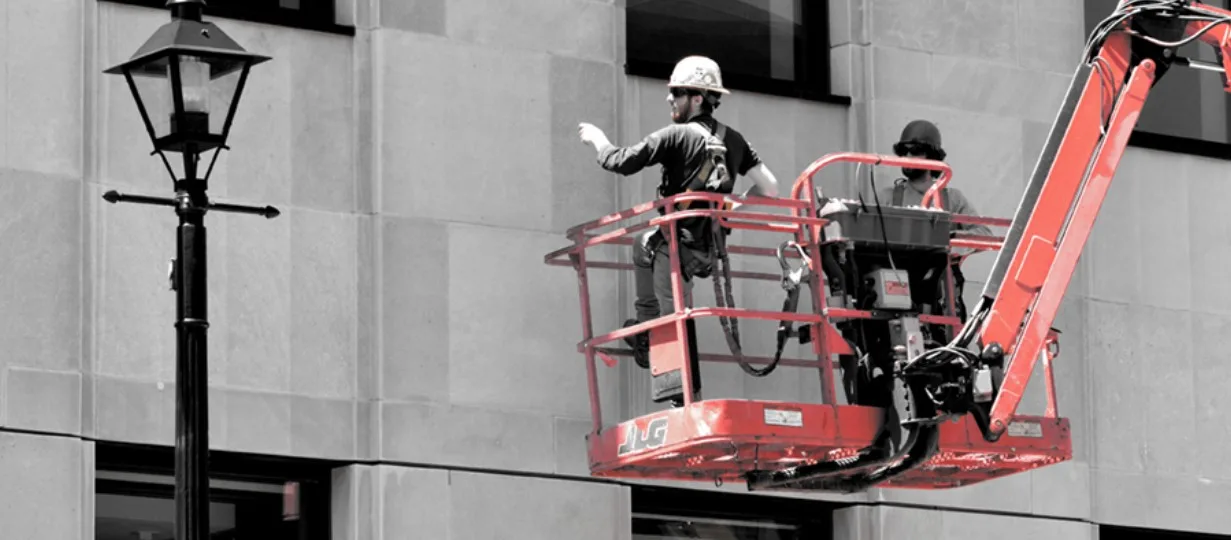 Hands-on close-up examination
Built for the people who answer for the façade.
Boards, owners and managers of New York City buildings taller than six stories.
Co-op buildings
Board-ready reports and repair budgets shareholders can follow, with assessments planned a cycle ahead.
Condo buildings
Balconies, terraces and unit access coordinated with the board and managing agent.
Hotels
Inspections and repairs scheduled around occupancy, using lifts and rope access to keep the entrance clear.
Office buildings
Curtain walls, cladding and setbacks examined without disrupting tenants.
Property management firms
One QEWI team and FISP Watch alerts across your whole portfolio, with every deadline tracked.
We track every FISP building in New York City.
Our own mapping platform reads DOB façade filings for every building in the five boroughs and colors each one by its status. Add your building and we'll tell you before your window opens, when the DOB status changes, and when your parapet observation is due.
One team from inspection to an amended Safe filing.
Critical Examinations
Hands-on close-up and visual inspections led by our QEWIs, with every condition photographed and mapped.
TR6 reports & DOB NOW filing
FISP technical reports (TR6) classified Safe, SWARMP or Unsafe, filed in DOB NOW: Safety within 60 days of the inspection.
Repair design
Drawings and specifications for brick, terra-cotta, limestone, masonry, stucco and cladding repairs.
Construction administration
Bidding support, site observation and sign-off through to an amended Safe filing.
Annual parapet observations
The yearly parapet check and record the DOB now requires, coordinated with your FISP schedule.
Minimal scaffolding
We plan with owners to avoid long-standing sidewalk sheds: rappellers and lift buckets where possible, and repair sequencing that gets any shed down sooner.
Scan-mapped conditions
Terrestrial LiDAR and drone imagery plan every drop and record conditions precisely from cycle to cycle. They support the hands-on exam but don't replace it.
Landmark FISP remediation
Repairs to landmark and historic façades, designed with care around NYC Landmarks Preservation Commission (LPC) requirements: matched materials, conservative repair methods and LPC filings prepared alongside the DOB work.
Safe, SWARMP or Unsafe, and what each one costs you.
No action needed
No conditions that need repair within the cycle. You're done until your next sub-cycle.
Safe with a repair and maintenance program
Conditions to repair within the time the QEWI sets, up to five years. The same condition can't be SWARMP two cycles in a row.
Protect now, repair fast
Immediate public protection, usually a sidewalk shed. Repairs are due within 90 days of filing unless the DOB grants an extension.
Penalties as published for Cycles 9 and 10. Confirm current amounts with the DOB.
No surprises at filing time.
We plan around your sub-cycle deadline, so access, scaffolding and repairs are booked before the window closes.
- Confirm your sub-cycle and DOB historyWe pull prior FISP reports, open violations and SWARMP items before we quote.
- Plan access and scanA LiDAR scan and drone imagery set the drop locations. We use rappellers and lift buckets where possible, so scaffolds and sidewalk sheds go up only where they're truly needed.
- Hands-on Critical ExaminationOur QEWIs examine the façade close up, run probes and check every appurtenance and parapet.
- Report filed with the DOBFiled within 60 days, with photos and conditions mapped to the elevation.
- Repairs and an amended filingWe design and oversee the repairs, then file the amended report that brings you back to Safe.
Local Law 11, answered.
Don't see yours? Call 347-709-2568.
Does my building need a FISP inspection?
Yes, if it is taller than six stories. Every façade is covered, not only the street side, along with appurtenances like balconies, fire escapes and parapets.
What is a QEWI?
A Qualified Exterior Wall Inspector is a New York State licensed architect or professional engineer with at least one year of relevant experience. Only a QEWI can sign and file a FISP report. Our QEWIs do the hands-on examination themselves.
How do I find my Cycle 10 deadline?
Use the last digit of your tax block number. Blocks ending 4, 5, 6 or 9 are in 10A (due Feb 21, 2027). Blocks ending 0, 7 or 8 are in 10B (due Feb 21, 2028). Blocks ending 1, 2 or 3 are in 10C (due Feb 21, 2029).
Can a drone replace the hands-on inspection?
Not under current rules. Drone imagery and 3D scans help plan access and document conditions, but the DOB still requires a physical close-up examination at no more than 60-foot intervals along façades facing a public right-of-way.
How long does a FISP inspection take?
It depends on height, façade area and access. A typical mid-rise takes a few days of hands-on work. We confirm the schedule with the proposal, and the report is filed within 60 days of the inspection.
What is the annual parapet observation?
Buildings with parapets facing a public right-of-way need a yearly observation and a record kept on file. A FISP report can cover that year's observation if it includes the required information.
What happens if my building is filed Unsafe?
You need immediate public protection, usually a sidewalk shed, and repairs within 90 days of filing unless the DOB grants an extension. We design the repairs, oversee the work and file the amended report to close it out.
My building is a landmark. What changes?
FISP repairs on a designated landmark, or on a building in a historic district, usually need Landmarks Preservation Commission approval as well as DOB permits. We drone-scan the façade to document every ornament, then design the remediation around LPC requirements so that safety repairs don't stall in review.
How much does a FISP inspection cost?
Facade inspection fees depend on building height, the length of facade to examine, how we get access (rope access, lift or scaffold), whether probes are due this cycle and whether the building is a landmark. We review your DOB filing history and access first, then send a written proposal with a clear fee.
What is a TR6 report?
The TR6 is the FISP technical report a QEWI files with the Department of Buildings through DOB NOW: Safety. It records the Critical Examination, photos and the building's classification as Safe, SWARMP or Unsafe.
What does "No Report Filed" mean?
It is the DOB status for a building with no accepted FISP report for the current cycle. Late-filing penalties of $1,000 a month keep running until a report is accepted, so we prioritize these buildings.
Which neighborhoods do you cover?
Our QEWIs work mainly in Manhattan, from the Financial District and Tribeca through Midtown to the Upper East and Upper West Sides, plus Downtown Brooklyn and Long Island City. We also take on buildings in the other boroughs.

Is your FISP deadline coming up? Let’s get ahead of it.
Send the address and we’ll confirm your sub-cycle, pull your DOB history and tell you what the inspection will involve.